
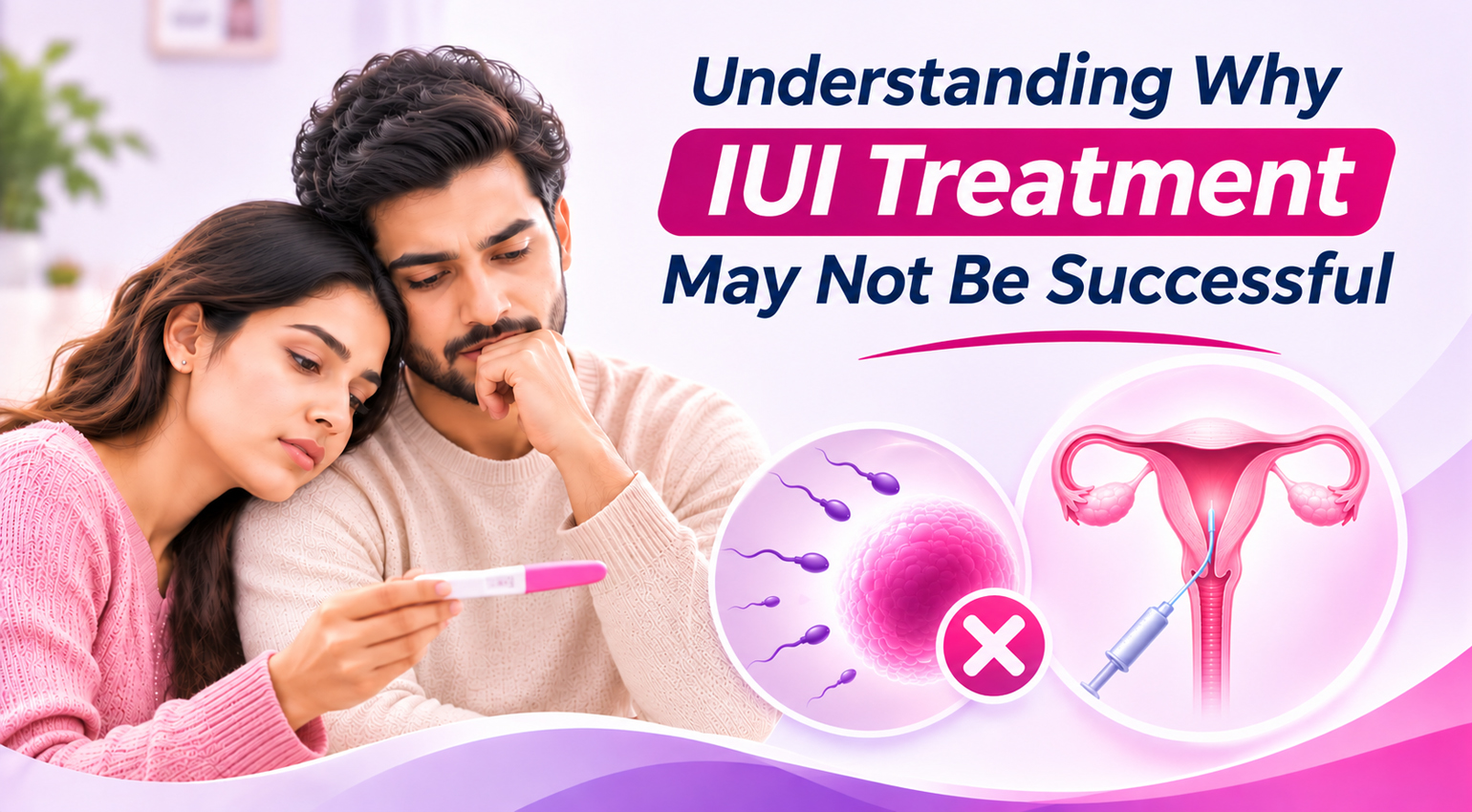
Starting fertility treatment is a journey filled with hope, expectations and sometimes uncertainty. For many couples trying to conceive, IUI (Intrauterine Insemination) is often considered an initial fertility treatment option, depending on their individual fertility needs. It is a relatively simple procedure that places prepared sperm directly into the uterus around the time of ovulation.
But what happens when an IUI cycle does not result in pregnancy?
An unsuccessful IUI attempt can be disappointing, especially when you have been looking forward to a positive result. It is natural to wonder whether something went wrong or whether another attempt will improve your chances.
The important thing to understand is that an unsuccessful IUI cycle does not necessarily mean that pregnancy is impossible. Several factors can influence the outcome, and sometimes the exact reason cannot be identified.
At FertiCore Fertility & IVF Centre, we believe that understanding these factors can help couples have more informed conversations with their fertility specialist. Let's look at some common reasons why IUI may not work and what can be considered next.
What Is IUI Treatment?
Intrauterine Insemination, commonly known as IUI, is a fertility treatment in which specially prepared sperm are placed directly inside the uterus around the time of ovulation.
The aim is to bring sperm closer to the egg, making it easier for fertilisation to occur. Depending on the individual's condition, IUI may be performed during a natural menstrual cycle or with fertility medications to support ovulation.
IUI may be recommended in certain situations, such as:
• Mild male-factor infertility.
• Ovulation-related difficulties.
• Unexplained infertility in selected cases.
• Certain cervical factors affecting sperm movement.
• Situations where donor sperm is being used.
However, IUI is not suitable for every fertility condition. A fertility specialist usually considers the woman's age, ovarian function, fallopian tube health, sperm parameters and medical history before recommending treatment.
Common Causes of IUI Failure
An IUI cycle involves several steps, including ovulation, sperm preparation, fertilisation and early embryo development. A problem at any stage may affect the possibility of pregnancy.
Here are some factors that can influence IUI outcomes.
1. Age and Egg Quality
Age is one of the important factors affecting female fertility. As a woman gets older, both the number of available eggs and the likelihood of chromosomal abnormalities in eggs can change.
These changes may affect fertilisation, embryo development and the chances of achieving pregnancy.
This is one reason why age is considered when deciding whether IUI is an appropriate treatment option or whether another fertility treatment may be more suitable.
2. Poor Egg Quality or Ovarian Reserve
The quality of an egg plays an important role in fertilisation and embryo development. A lower ovarian reserve may also affect the response to fertility medications and the number of eggs available.
However, ovarian reserve tests do not directly measure egg quality or guarantee whether a woman will conceive.
Your fertility specialist may recommend tests such as AMH, antral follicle count and other hormonal investigations to understand your ovarian function.
3. Problems with Ovulation
For IUI to have a reasonable chance of success, insemination needs to be coordinated with ovulation.
Some women may experience irregular ovulation or conditions such as Polycystic Ovary Syndrome (PCOS), which can make predicting ovulation more difficult.
If ovulation does not occur as expected, or if the timing of insemination is not appropriately coordinated, the chances of pregnancy may be affected.
Doctors may use ultrasound monitoring, hormonal tests or ovulation-inducing medication when clinically appropriate.
4. Blocked or Damaged Fallopian Tubes
The fallopian tubes play an essential role in natural fertilisation. After ovulation, the egg travels through the fallopian tube, where it may meet sperm.
IUI places prepared sperm inside the uterus, but it does not bypass the fallopian tubes.
If both fallopian tubes are blocked or significantly damaged, sperm and egg may not be able to meet. In such situations, IUI is generally not an appropriate treatment option, and IVF may be discussed.
This is why checking tubal health is an important part of fertility evaluation before starting IUI.
5. Male-Factor Infertility
Sperm health is another important factor in IUI outcomes.
Although sperm are washed and prepared before the procedure, certain sperm-related problems may still reduce the chances of fertilisation.
These may include:
• Low sperm count.
• Poor sperm motility (movement).
• Abnormal sperm morphology (shape).
• A low number of motile sperm after preparation.
A semen analysis helps assess sperm parameters. Depending on the results, the fertility specialist may recommend further evaluation or discuss whether IUI, IVF or ICSI is more appropriate.
6. Endometriosis
Endometriosis occurs when tissue similar to the lining of the uterus begins to grow outside the uterus. It may affect the ovaries, fallopian tubes and surrounding pelvic structures.
Depending on its severity and location, endometriosis can influence fertility through inflammation, adhesions or changes in pelvic anatomy.
Some women with mild endometriosis may be considered for IUI, while others may benefit from a different treatment approach. The decision depends on individual findings.
7. Timing of the IUI Procedure
Timing is an important part of IUI treatment. The procedure is usually scheduled around ovulation so that prepared sperm are present in the reproductive tract when the egg is released.
If ovulation timing is not accurately identified, the opportunity for fertilisation may be reduced.
Ultrasound scans and, when needed, hormonal monitoring help the fertility team decide when to perform insemination.
8. Unexplained Infertility
In some cases, fertility tests may not identify a specific reason why a couple is experiencing difficulty conceiving.
This is known as unexplained infertility. It does not mean that there is no underlying factor; rather, routine tests have not identified a definite cause.
Even when standard test results appear normal, pregnancy may not occur in every IUI cycle. A fertility specialist can review the treatment history and discuss whether continuing IUI or considering another option is appropriate.
9. Other Factors Affecting Fertility
Certain medical conditions and lifestyle factors may also influence reproductive health.
For example, thyroid disorders, uncontrolled diabetes, significant weight-related concerns and smoking may affect fertility in some individuals.
These factors do not automatically explain an unsuccessful IUI cycle, but identifying and managing relevant health concerns may form part of a personalised fertility plan.
Does One Failed IUI Attempt Mean IUI Will Never Work?
Not at all.
One unsuccessful IUI cycle does not necessarily mean that the treatment will not work in a future attempt. Pregnancy depends on several biological factors, and even when treatment is carefully monitored, success cannot be guaranteed in every cycle.
Your doctor may review:
• Whether ovulation occurred as expected.
• The number and development of mature follicles.
• The timing of insemination.
• Sperm count and motility after preparation.
• Your age and ovarian reserve.
• The health of your fallopian tubes.
• Any relevant medical or fertility history.
Based on these findings, your specialist can help you understand whether another IUI attempt is reasonable.
How Many IUI Cycles Should You Try?
There is no single number of IUI cycles that is right for every couple.
Some couples may achieve pregnancy in an early cycle, while others may need more than one attempt. The recommended number depends on factors such as age, diagnosis, duration of infertility, sperm parameters and previous treatment response.
For selected couples, a limited number of IUI attempts may be considered before discussing IVF. However, continuing IUI is not always the best option, particularly when there are factors that make its success less likely.
It is important to discuss the expected benefits, limitations, costs and alternatives with your fertility specialist rather than continuing treatment without reviewing the results.
What Should You Do After an Unsuccessful IUI Cycle?
An unsuccessful cycle can bring many questions. Instead of immediately moving to another attempt, take time to discuss the previous cycle with your fertility specialist.
Here are a few steps that may help:
1. Review Your Previous Treatment Cycle
Ask your doctor about follicle development, ovulation timing, sperm preparation results and any other findings from the previous attempt.
2. Reassess Your Fertility Health
Depending on your medical history, your specialist may recommend reviewing ovarian reserve, tubal health, hormonal levels or semen analysis.
3. Discuss Whether Another IUI Attempt Is Suitable
Your doctor may suggest another monitored cycle if the findings support it. If the expected chances are low, alternative treatment options may be discussed.
4. Understand Your Other Treatment Options
If IUI is not suitable or has not been successful after an appropriate number of attempts, IVF may be considered.
In some cases, Intracytoplasmic Sperm Injection (ICSI) may also be recommended, particularly when specific sperm-related factors are present.
The right approach depends on the couple's individual fertility assessment.
IUI vs IVF: What Happens If IUI Does Not Work?
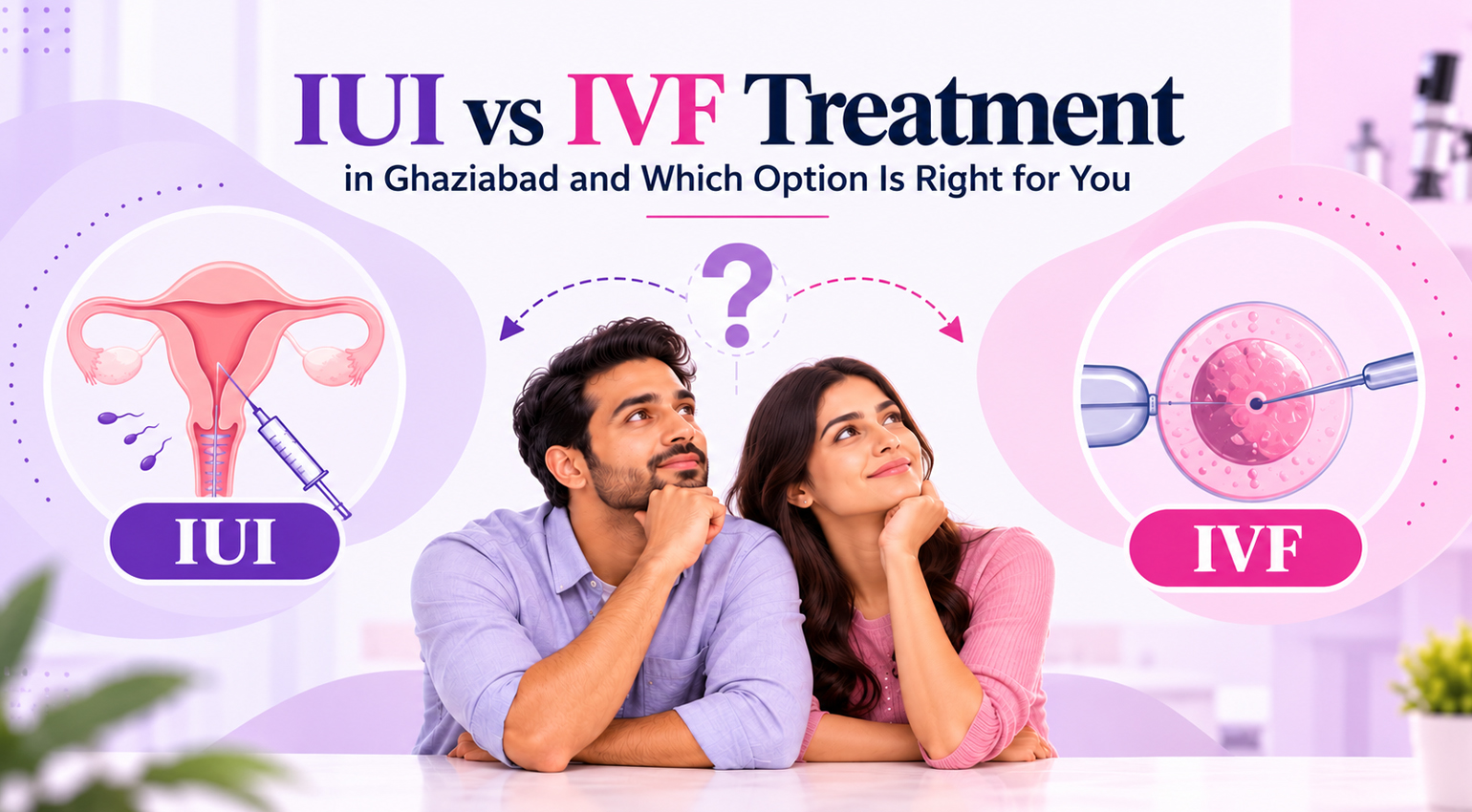
IUI and IVF are different fertility treatments, and they are recommended for different clinical situations.
In IUI, prepared sperm are placed inside the uterus, and fertilisation is expected to happen naturally inside the body.
In IVF, eggs are collected from the ovaries and fertilised with sperm in a laboratory. The resulting embryo is monitored before an embryo transfer is considered.
IVF may be recommended when:
• The fallopian tubes are blocked or severely damaged.
• There are significant sperm-related concerns.
• IUI has not been successful after an appropriate number of attempts.
• There are other fertility factors for which IVF may be more suitable.
• The woman's age or fertility history makes a different treatment approach more appropriate.
Your specialist can explain the advantages and limitations of each option based on your diagnosis and treatment goals.
Why Personalised Fertility Care Matters
No two fertility journeys are exactly alike. Two couples may undergo the same treatment but have very different outcomes because their medical histories and fertility factors are different.
A personalised treatment plan considers more than just the number of unsuccessful attempts. It looks at the complete picture, including reproductive health, previous test results, treatment response and individual goals.
At FertiCore Fertility & IVF Centre, the focus is on helping couples understand their fertility concerns and the treatment options available to them. A detailed consultation with a fertility specialist can help you make informed decisions about the next steps.
Frequently Asked Questions (FAQs)
1. What is the most common reason for IUI failure?
There is no single most common reason for every couple. Age, egg and sperm factors, ovulation problems, tubal health and underlying fertility conditions can all influence IUI outcomes. Sometimes, no definite reason is identified.
2. Can IUI fail even when all reports are normal?
Yes. Normal fertility test results do not guarantee pregnancy in every cycle. Some factors affecting fertilisation and early embryo development may not be detected through routine investigations.
3. Can poor sperm quality cause IUI failure?
Yes. Low sperm count, poor motility and other sperm-related concerns may reduce the chances of pregnancy. The semen analysis and sperm preparation results help doctors assess whether IUI is suitable.
4. Should I try IUI again after one unsuccessful attempt?
It depends on your age, diagnosis, previous cycle response and other fertility factors. Your doctor can review the previous attempt and advise whether another cycle is appropriate.
5. When should I consider IVF after failed IUI?
IVF may be discussed when IUI is unlikely to be effective, when certain fertility conditions are present, or after an appropriate number of unsuccessful attempts. The decision should be based on an individual fertility assessment.
6. Does stress cause IUI failure?
An unsuccessful IUI cycle should not be blamed on stress. Fertility outcomes depend on several biological and medical factors. Emotional support can be helpful during treatment, but couples should not feel responsible for an unsuccessful result.
7. Can lifestyle changes improve IUI success?
Healthy habits such as avoiding smoking, limiting alcohol, maintaining a balanced diet and managing existing health conditions can support overall reproductive health. However, lifestyle changes cannot guarantee IUI success or replace medical treatment.
Final Thoughts
An unsuccessful IUI cycle can be emotionally difficult, but it does not mean that your journey towards parenthood has come to an end.
Understanding the possible reasons behind an unsuccessful attempt can help you and your doctor decide what to do next. Whether another IUI cycle is appropriate or IVF should be considered, the decision should be based on your individual fertility needs.
If you are planning IUI treatment or have experienced an unsuccessful cycle, consider speaking with a qualified fertility specialist. The right guidance can help you understand your options and move forward with greater clarity.
At FertiCore Fertility & IVF Centre, every fertility journey deserves thoughtful evaluation, compassionate support and an individualised approach to care.
Medical Disclaimer: This article is intended for general educational purposes only. It does not replace a medical consultation, diagnosis or treatment. IUI suitability and outcomes vary from person to person. Please consult a qualified fertility specialist for advice based on your medical history and test results.
 Understanding Why IUI Treatment May Not Be Successful
 Fetal Movements During Pregnancy How to Monitor Your Baby’s Kicks
 IUI vs IVF in Indirapuram, Ghaziabad - Which Fertility Treatment Is Right for You?
 Ovarian Stimulation in IVF – How It Works and What to Expect
 Understanding Your Fertile Window - How to Identify Your Most Fertile Days in Ghaziabad
 IVF Specialist in Ghaziabad - How to Choose the Right Fertility Doctor
 IVF Success Rate in Ghaziabad - What Actually Influences Treatment Outcomes
 FertiCore Fertility & IVF Centre - Personalised Fertility Care in Indirapuram
 From Your First Consultation to IVF Treatment - What Your Fertility Journey at FertiCore May Look Like
 IVF Centre Near Me in Ghaziabad — What to Look For Before You Choose
 Best IVF Center in Vaishali, Indirapuram & Raj Nagar Extension, Ghaziabad – How to Choose the Right Fertility Clinic
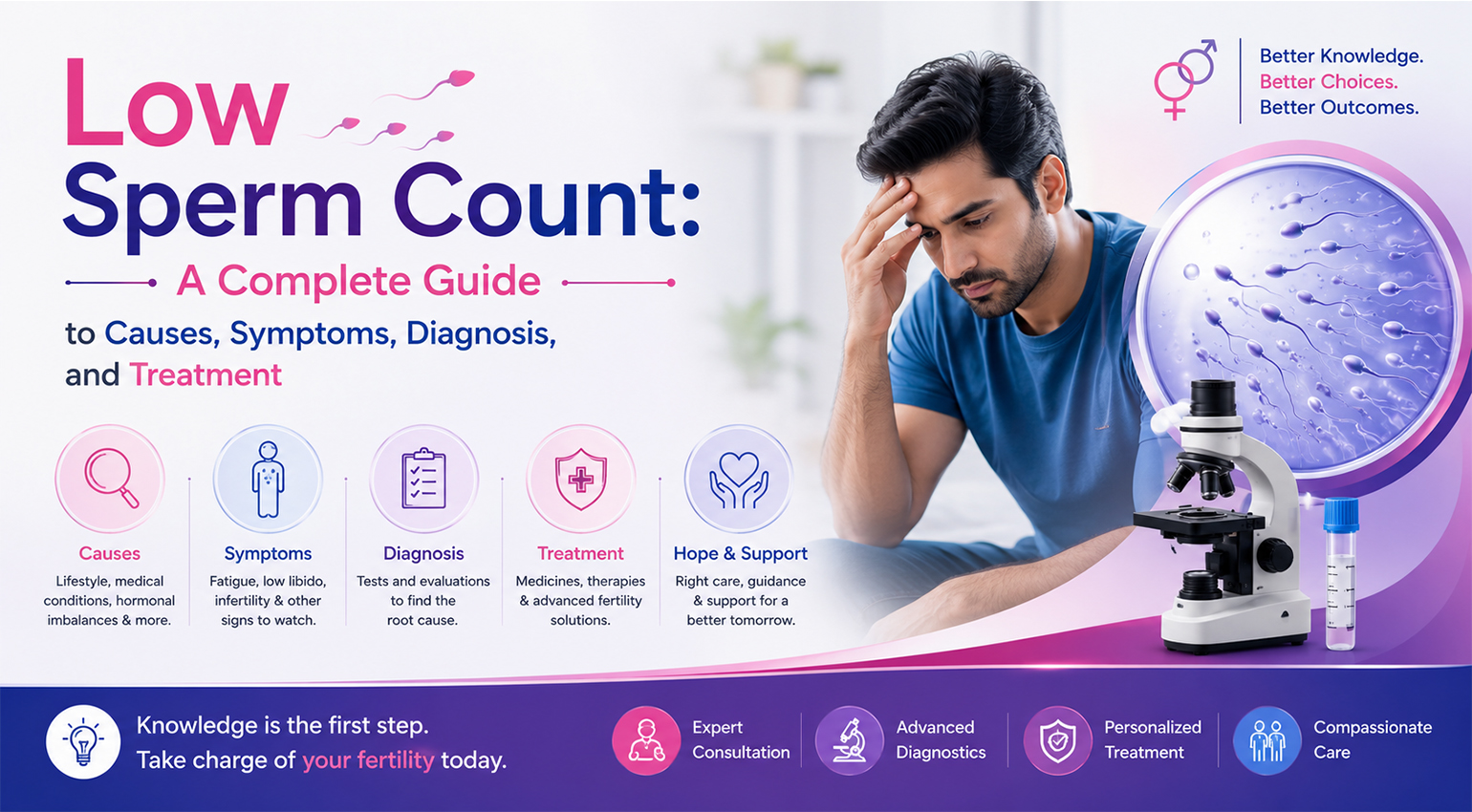 Low Sperm Count: A Complete Guide to Causes, Symptoms, Diagnosis, and Treatment
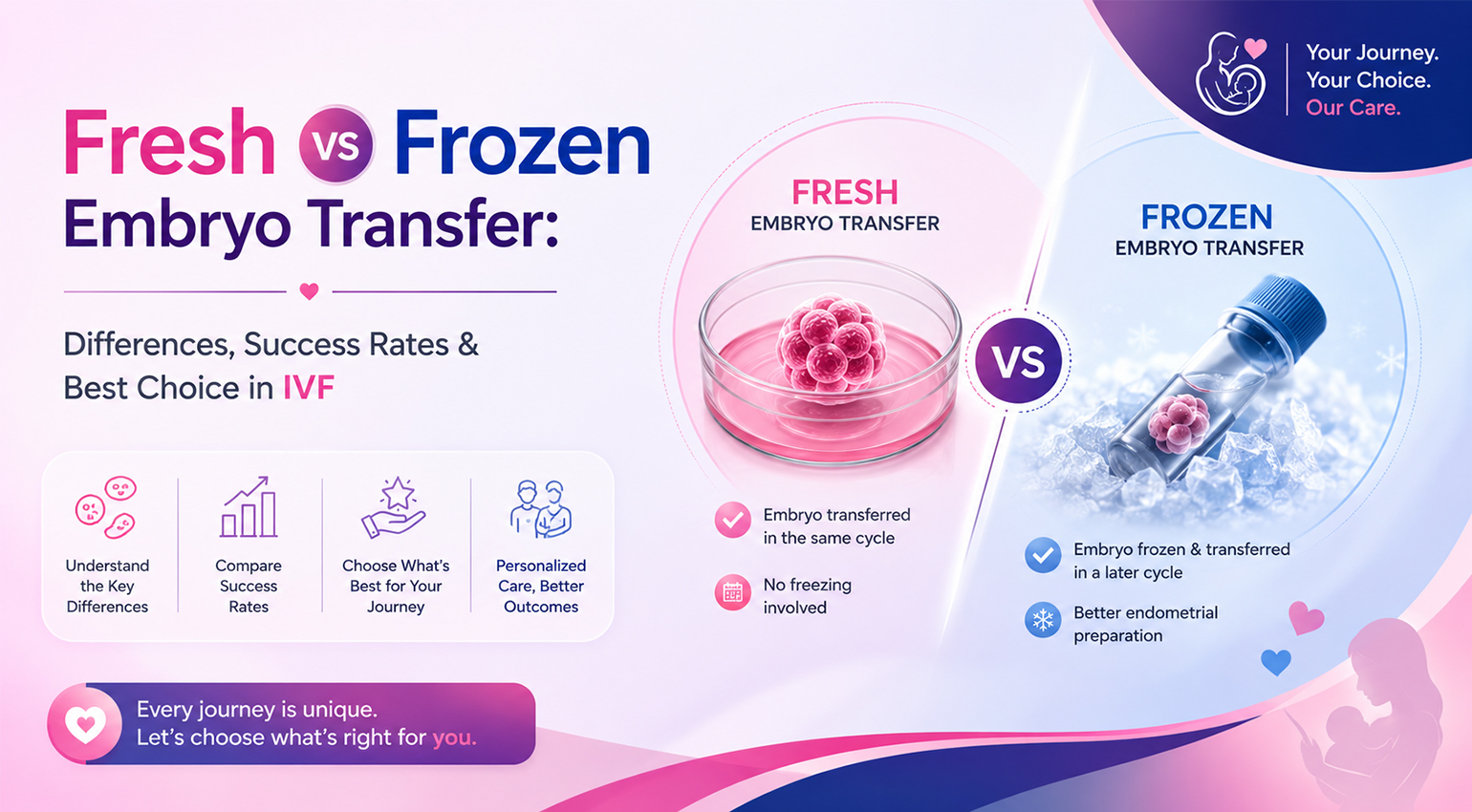 Fresh vs Frozen Embryo Transfer: Differences, Success Rates & Best Choice in IVF
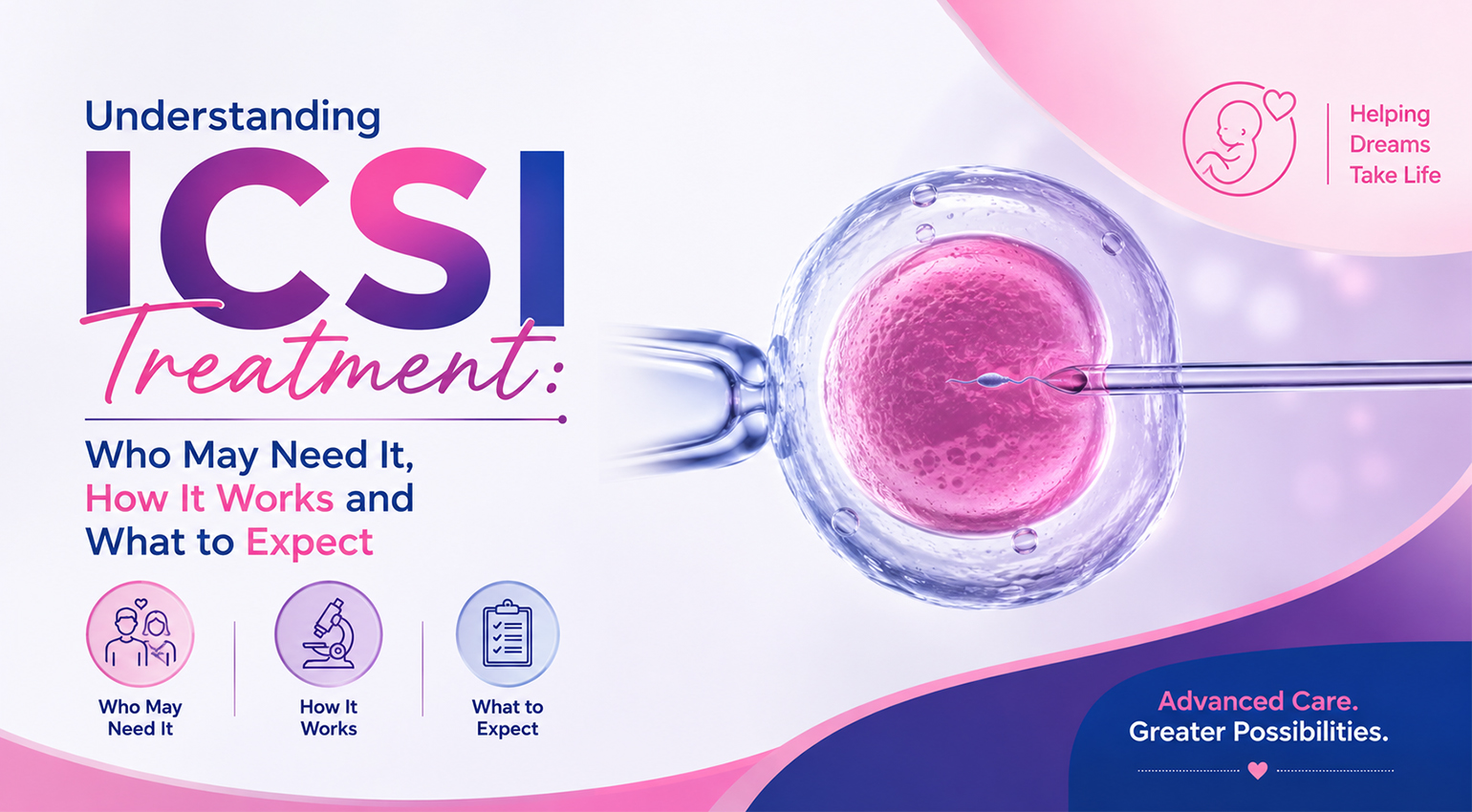 Understanding ICSI Treatment: Who May Need It, How It Works and What to Expect
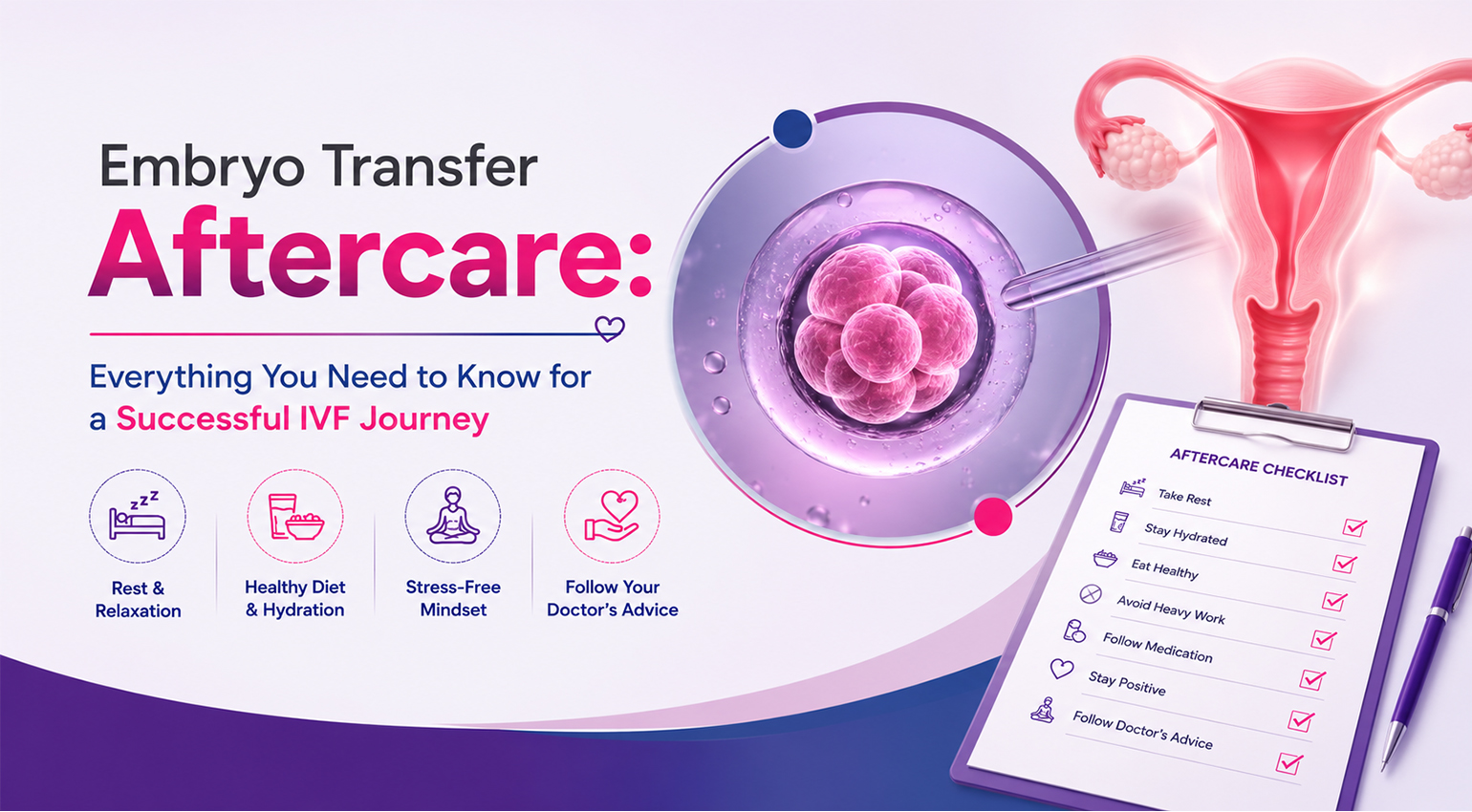 Embryo Transfer Aftercare: Everything You Need to Know for a Successful IVF Journey
 IVF After 35: What You Really Need to Know About Success Rates, Expectations and Treatment Options
 Natural Strategies to Enhance Egg Quality for IVF Success - Ferticore IVF Centre
 All You Need to Know About Preserving Female Fertility
 7 Signs That Your Embryo Transfer May Have Been Successful
 Understanding the Connection between Stress and Infertility
 Everything You Need to Know About Evaluation of Male Infertility
 A Comprehensive Overview of Follicular Monitoring Procedure and Success Rates at Ferticore IVF Centre
 10 Key Questions to Ask Your Fertility Specialist About IVF at Ferticore IVF Center
 Unveiling the Path to Success with ICSI Treatment in Indirapuram - Ferticore IVF Centre
 Everything You Need To Know about Laparoscopy Surgery at Ferticore IVF Centre
 Things You Must Know About Intrauterine Insemination (IUI) Treatment- Ferticore IVF centre
 Understanding Fertility: Common Causes and Treatments
 Personalized Care in IVF: Tailoring Treatments for Individual Needs
 Understanding Endometriosis and its Impact on Fertility
 Navigating the IVF Journey: A Step-by-Step Guide
 10 Best Foods That Can Enhance IVF Success and Boost Fertility Naturally
Copyright © 2026 . Designed By Wafi Media Marketing Solutions Pvt. Ld.